


Accessibility and usability of websites
Designing an effective website means designing it with features that make it:
- accessible and easy to use, i.e., functional;
- Effective and clear in communication;
- Aesthetically pleasing.
The number of online sites that strongly lack in one or more of these aspects is surprising, but precisely this fact leaves open prairies for companies capable of taking advantage of competitors’ weakness to gain a competitive advantage inweb usability.
This issue is even more relevant for eCommerce sites that having the need to sell online have every interest in making the buying process more intuitive and immediate.

Equally important is that a site be easily reachable by visitors, unless it was made with different and more exclusive intentions. The discipline that deals with this issue is SEM (Search Engine Marketing) and an important specialty of it: SEO (Search Engine Optimization). SEO is used to improve the ranking of websites and the indexing of pages by search engines.
Accessible and easy-to-use websites
A good site must always be accessible, that is, easily usable by anyone. Today this means first and foremost that a site must be able to be navigated and used easily with any type of device: computer, tablet, phone. It must therefore be built, at the very least, according to the criteria of responsive design to make it adaptable to any type of screen. Visits from smartphones and tablets for many sites are already over 50 percent of the total and will continue to grow. Sites that are inadequate for viewing from all devices will therefore be increasingly penalized by search engines.
An accessible site must also be “friendly” to visitors who have disabilities. The use of the “alt” tag, for example, allows alternative text for images so that users with visual impairments, who use “speech software” programs for reading, can still access the proposed content. The alternative text also serves those who use text-based browsers due to internet bandwidth problems and difficulties in downloading images.
Information architecture, that is, the way content is organized, is the aspect that most directly influences the usability of a site. Especially in the case of portals and e-commerce sites, with dozens and hundreds of information blocks, it is essential that information be organized and related in a logical and intuitive way. Designing a clear hierarchical system that for each content area goes from the general to the particular providing the user with simple and obvious access to all content is a challenging but essential exercise in making a site accessible and easy to use.
Of course, for access to all areas of the site to be within the reach of even the most inexperienced visitor, an efficient and easy-to-use navigation system is needed. This is what navigation menus are for, through which visitors move from one section of the site to another. The system of links with their labels must be carefully designed and with an ergonomic approach, so to speak, that makes life easy for the user of the site. With this in mind, the coordination between information architecture and navigation functions is the decisive element in the usability of a website.
Usability and effectiveness are not exactly the same thing
It is not enough that all the functions activated on a site work properly by allowing visitors to quickly navigate through content and access relevant information. It is necessary to make sure that the visit to the site produces the results for which it was created, that visitors after being engaged in the enjoyment of the content perform the final actions that produce value for the company and that in the design phase were defined as business objectives.
Converting visits into sales of products or services, contact requests or sign-ups, participation and active involvement, requires meticulous attention to the quality of text and communication, the inclusion of effective images and lures, and the timely integration of buttons and “call to action” messages (inviting the user to action).
Site usability is a primary goal, but it must be thought out with the end goals in mind, which remain the real bottom line. A stupendously accessible site is efficient but not effective if it does not translate visits into real value for the organization or company that created it.
Accessibility, graphics, and design
There are countless websites that are graphically beautiful and polished in detail that would fail even the most basic of usability and accessibility tests. Many companies, confusing aesthetic impact (which has its value) with effectiveness and functionality, struggle to understand why their site does not go beyond a good function of showcasing and presenting their activities. In the worst cases from the lack of concrete or obvious results it is inferred that the web channel and online marketing are unprofitable and do not merit further investment.
Fortunately, the history of the industry comes to our rescue with the notion of design, a concept that is not limited to the purely aesthetic dimension of man-made artifacts, but incorporates reliefs of functionality, usability and ergonomics, to the point of incorporating values of style, communication and marketing. In this sense, for a website to be usable and effective at the same time, it must have been conceived as a product of design, satisfying aesthetic, functional and marketing requirements.
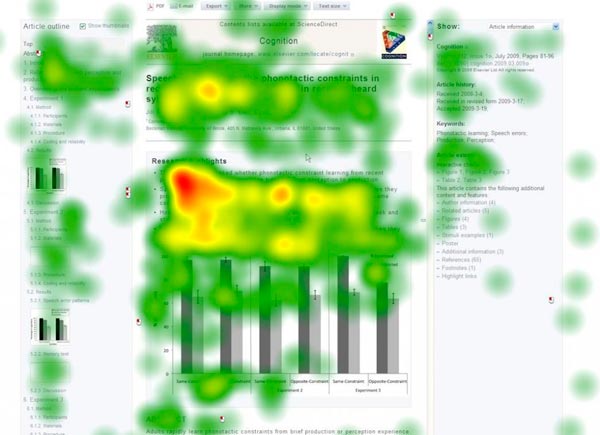
To give just one example: if eye tracking studies, carried out on people while browsing Web sites, show that the eye is more likely to land on certain areas of a page or on specific elements that draw attention, the design or revision of a site should always take this into account.
For eCommerce sites, these principles are even more imperative. The large amount of information on the pages, articulated functions such as the purchase process, the need to introduce elements of persuasion and reassurance at the same time, and so on, force developers, designers and web marketing experts to make a collective effort to create a website that meets all accessibility, usability and design requirements.
When the site is online, A/B tests and multivariate tests can be carried out to compare pages with different designs, varying, on precise assumptions, even minimal elements, and then analyzing navigation data by comparing degree of usability and profitability.
Optimizing website usability draws many useful insights from tracking data analysis based on web analytics tools. To this end, it is important to have good site access tracking and usage analysis software.
In the ecommerce industry, even more than in others, web marketing is an activity that begins upstream in the process of establishing one’s online presence, and continues downstream, with the sole objective of creating value.